Visit the Convent of Christ in Tomar, Portugal
On a hill overlooking the charming town of Tomar in central Portugal, the Convent of Christ (Convento de Cristo) is one of Portugal’s most extraordinary historic sites. Designated a UNESCO World Heritage Site in 1983, this vast complex is one of Portugal’s most impressive monuments as it combines centuries of Portuguese history, stunning architecture, and the legacy of the Knights Templar. Whether you’re interested in medieval history or architecture, visiting the Convent of Christ in Tomar should be part of your Portugal itinerary.
How to visit the Convent of Christ for Knights Templar history
The story of the Convent of Christ begins with the Knights Templar, a medieval Catholic military order founded in 1118 to protect Christian pilgrims traveling to the Holy Land. In 1160, Gualdim Pais, Grand Master of the Knights Templar in Portugal, founded the Castle of Tomar and adjoining church. The site served as the headquarters of the Knights Templar in Portugal during the Christian Reconquest of the Iberian Peninsula.
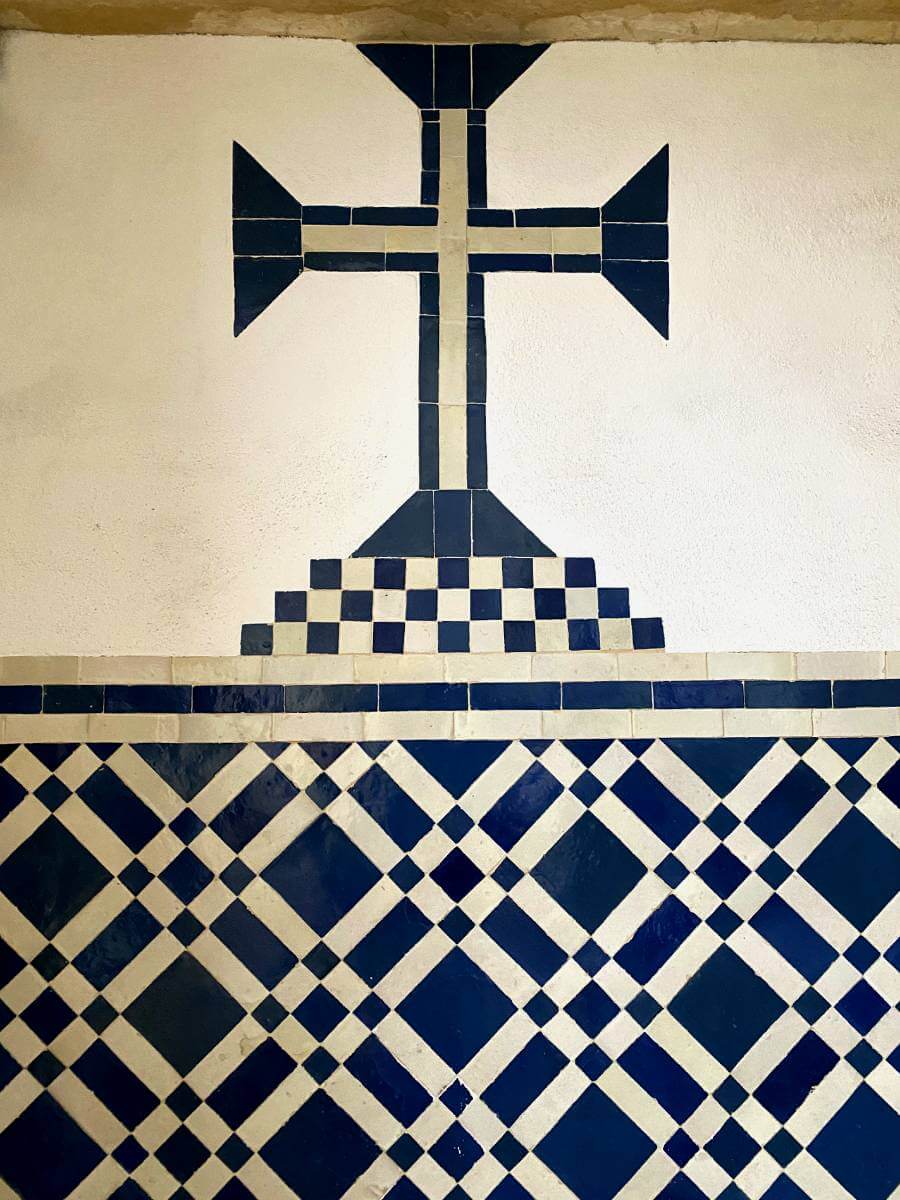
When the Knights Templar were later suppressed across Europe in the early 14th century, Portugal found a unique solution. The knights were reorganized as the Order of Christ, which established its headquarters at Tomar and allowed many former Templars from around Europe to continue their work under a new banner.
Under the leadership of Prince Henry the Navigator, the Order of Christ became deeply involved in financing and supporting Portugal’s Age of Discovery. UNESCO notes that while the complex originally symbolized the Christian Reconquest, it later came to represent Portugal’s openness to other cultures during the Age of Exploration.
Over the next five centuries, successive kings expanded the convent complex, transforming a fortified Templar stronghold into one of the country’s most important monuments.
Is the Convent of Christ in Tomar worth it?
In my opinion, visiting the Convent of Christ in Tomar is definitely worth it, especially if you enjoy history. It is one of the best-preserved Templar sites in Europe. Few places offer such a direct connection to the history of the legendary military order.
One of the things that makes the Convent of Christ so memorable is that it is more than a convent, castle, or church. It is a place where the stories of the Knights Templar, Prince Henry the Navigator, the Portuguese Age of Discovery, and centuries of architectural innovation all intersect. It offers a deeper understanding of the complex history that occurred right here in central Portugal.
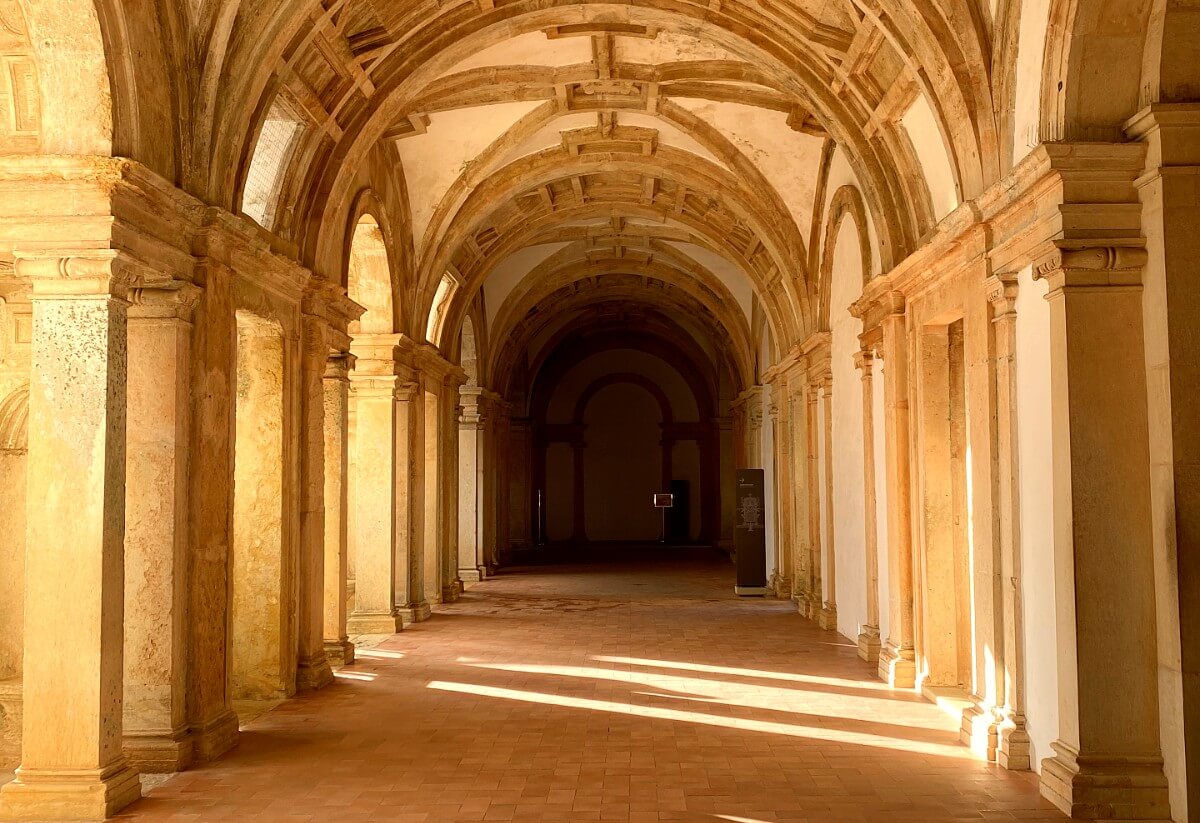
UNESCO recognized the convent under two World Heritage criteria: as a monument closely connected to one of the most important periods in Portuguese history (exploration and expansion) and as a masterpiece of human creative genius due to its range of architectural styles.
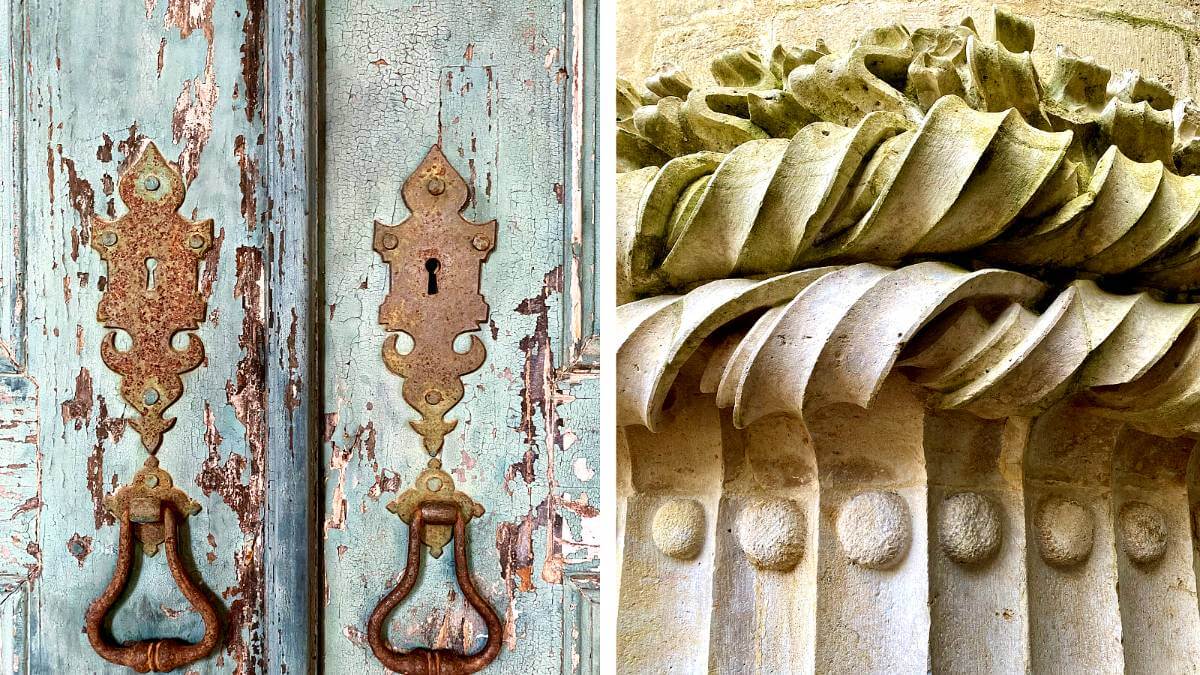
The Architecture
One of the most fascinating aspects of the Convent of Christ is its blend of architectural styles.
Romanesque
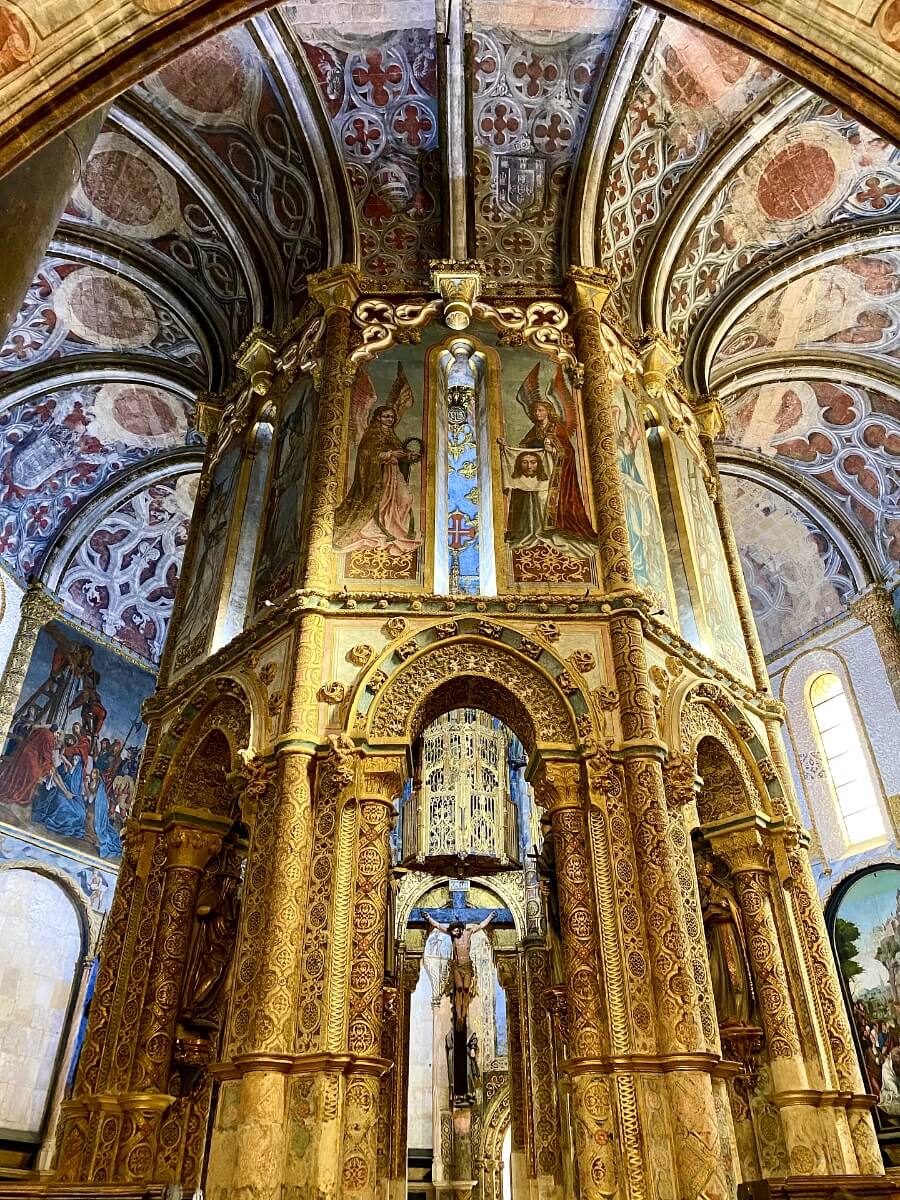
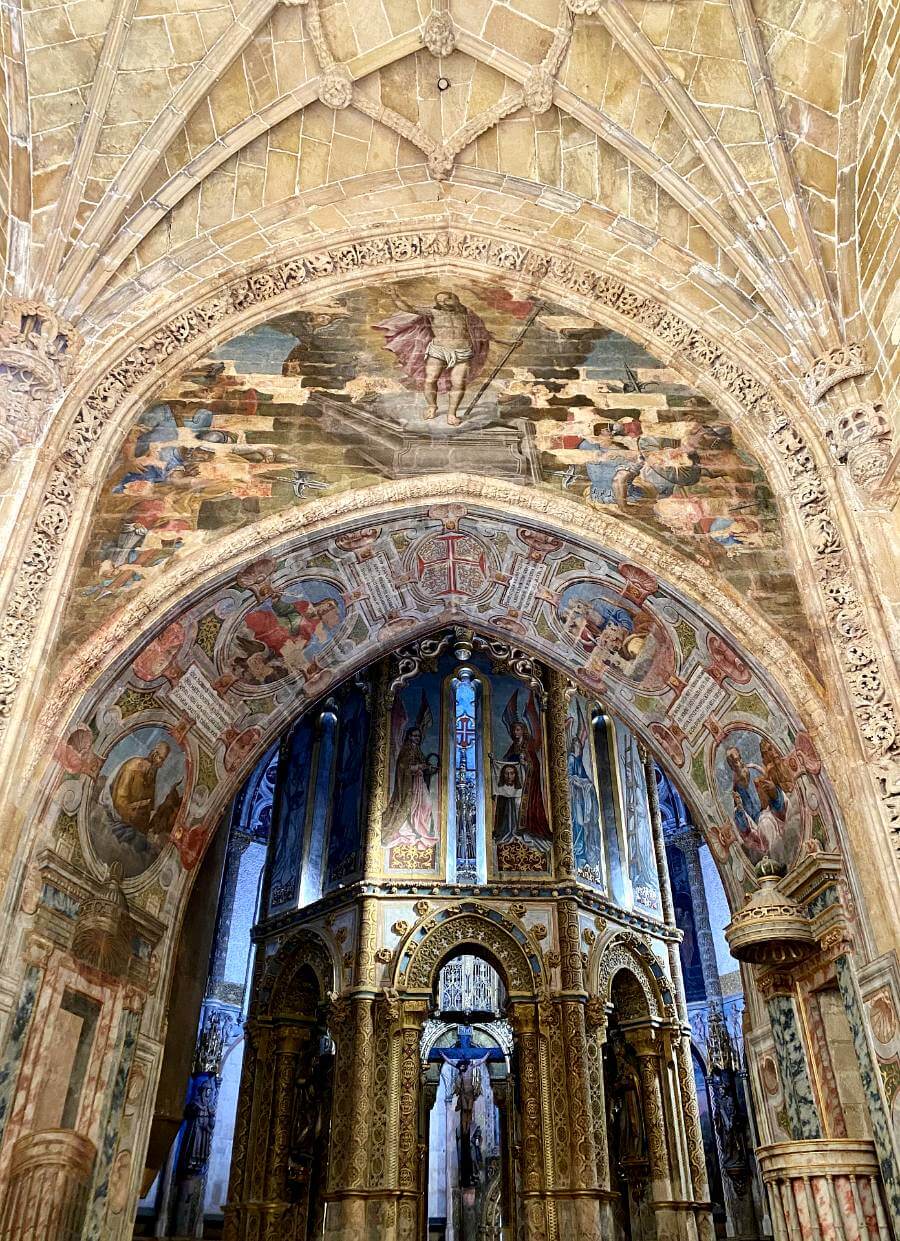
The oldest section is the 12th century Charola, or rotunda, a circular church inspired by the Church of the Holy Sepulchre in Jerusalem. The Charola is one of the few surviving Templar rotundas in Europe. Its unusual 16-sided plan and octagonal choir make it one of the most significant examples of Templar architecture still standing today.
Gothic
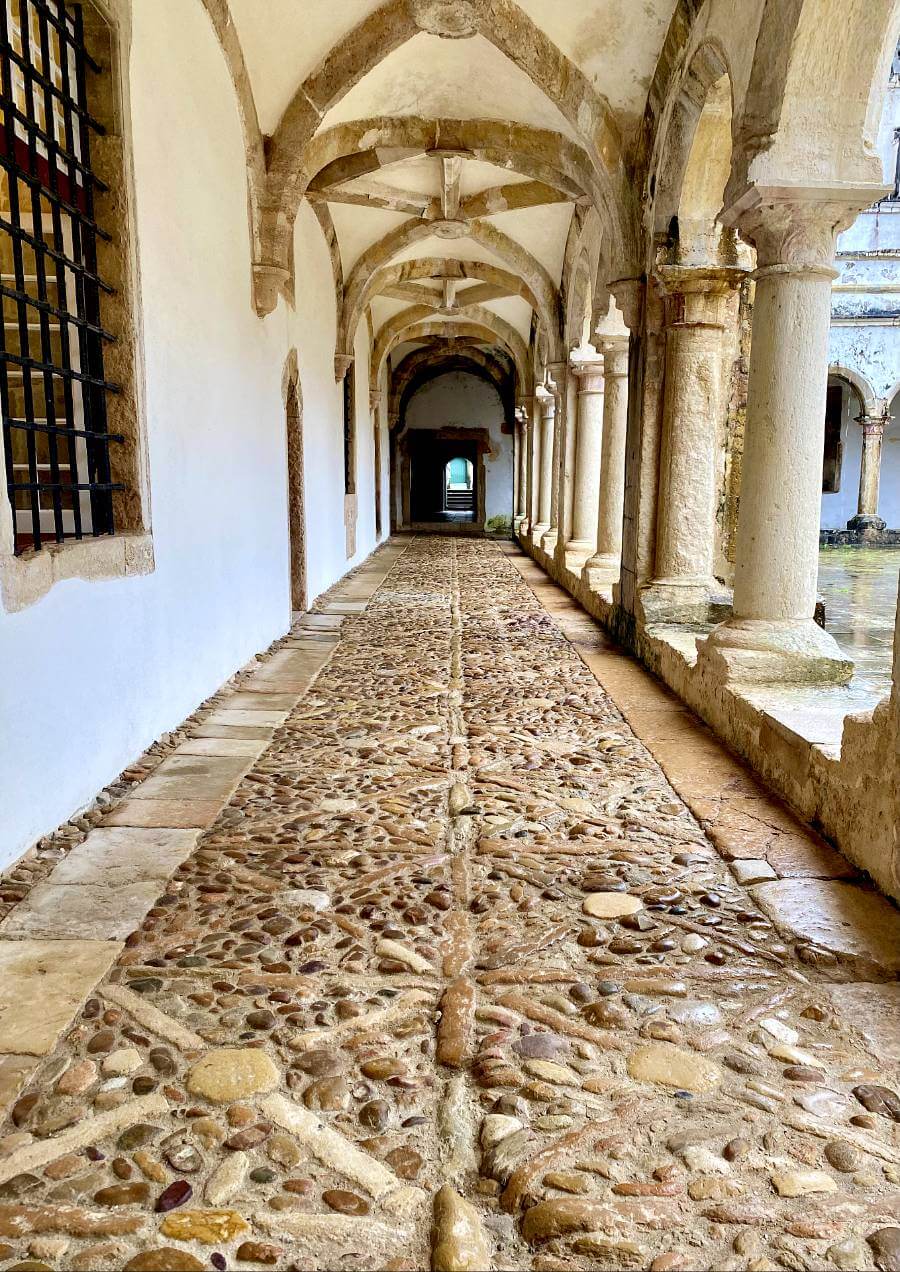
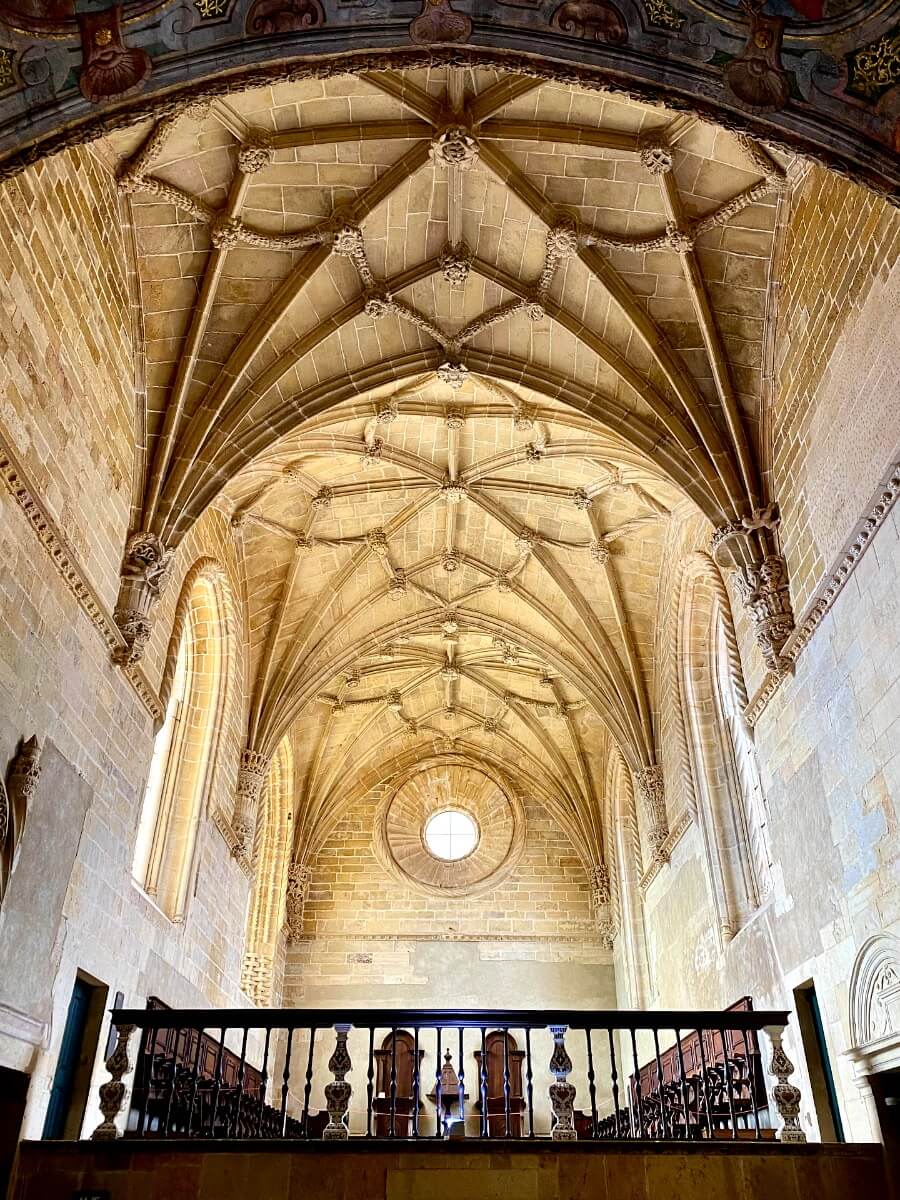
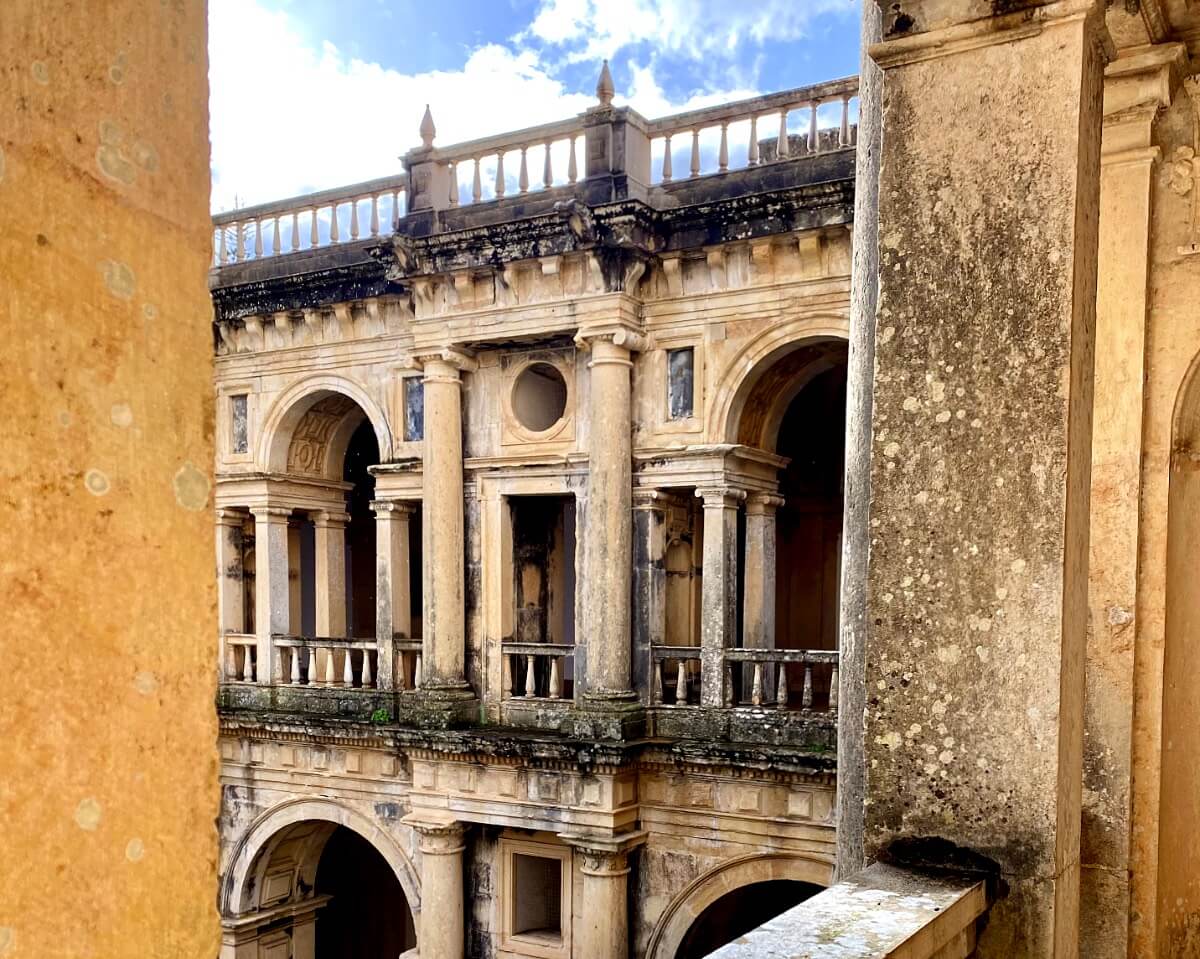
The Gothic cloisters and later additions introduced pointed arches and a more elegant, vertical design. The Cloister of the Cemetery is one of the finest examples from this period.
Renaissance
In the cloisters, you will notice the rounded arches and straight columns that are typical of Renaissance architecture.
Manueline
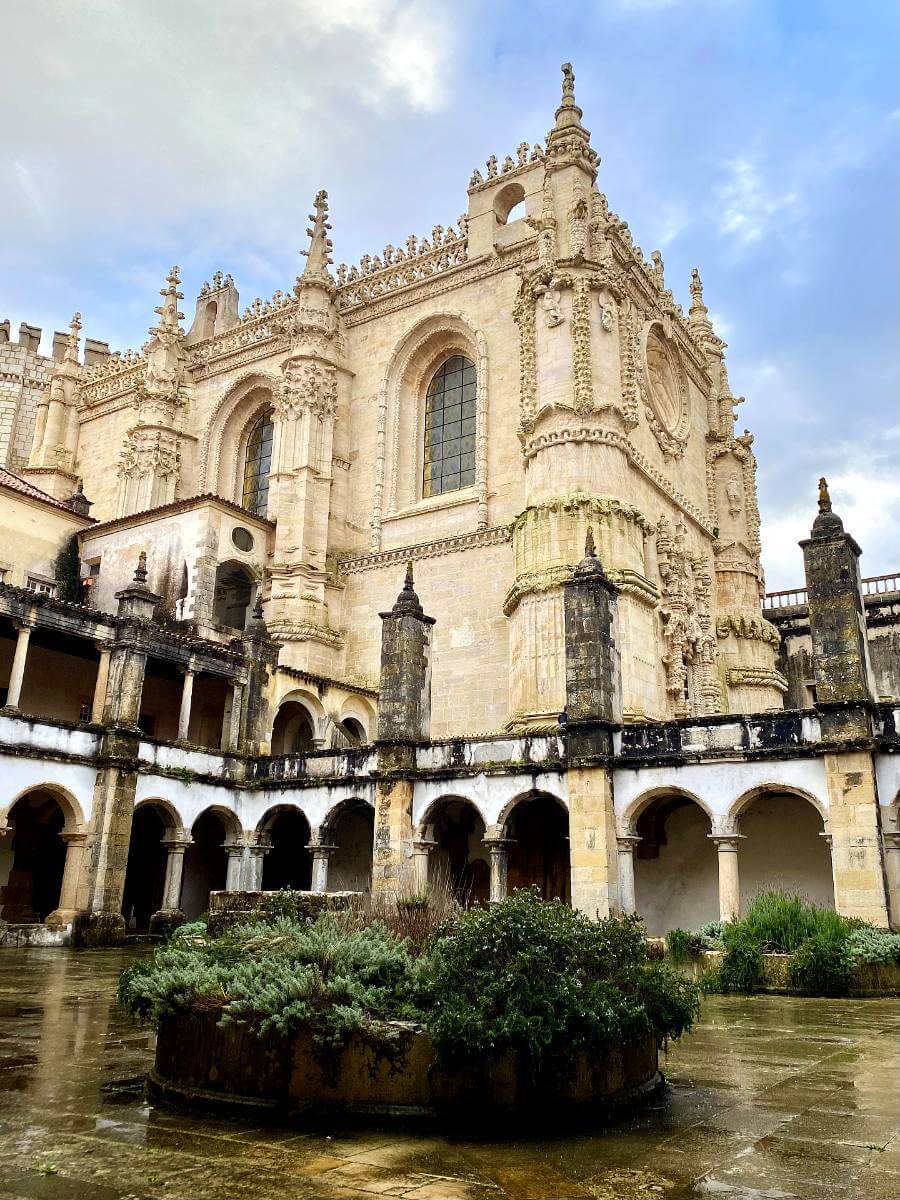
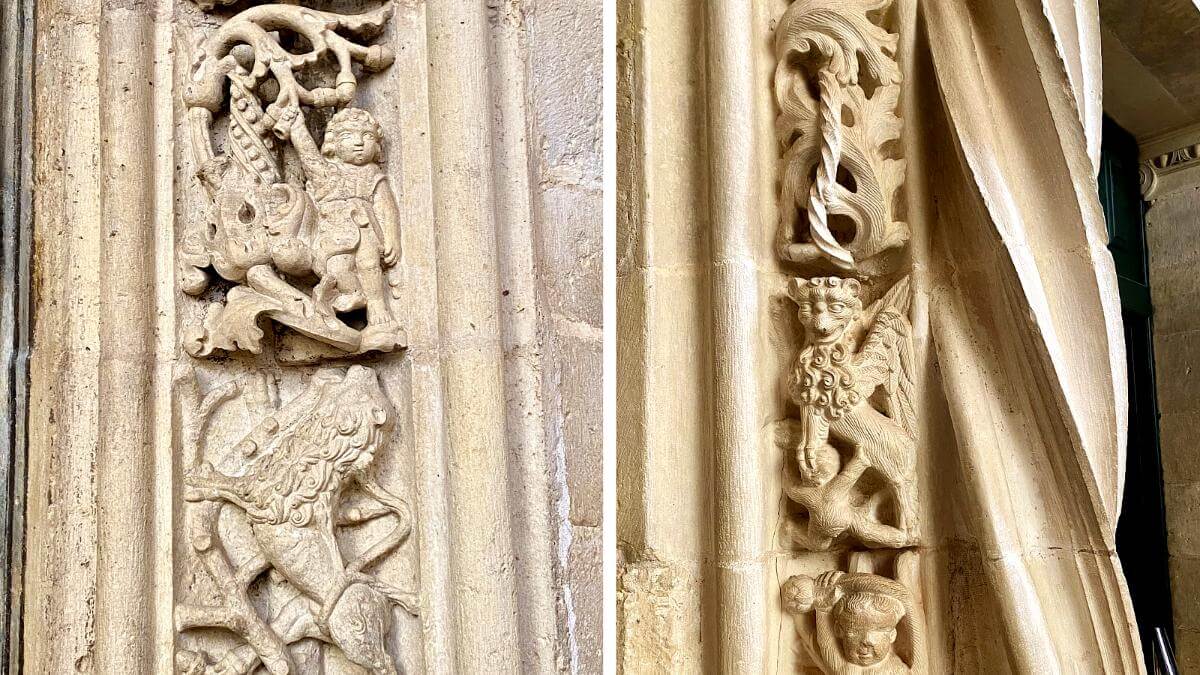
Along with the Jerónimos Monastery in Lisbon, this convent is famous for its Manueline architecture, a uniquely Portuguese style that flourished during the Age of Discovery. It combines Gothic, Renaissance, Moorish, and maritime influences into a uniquely Portuguese style.
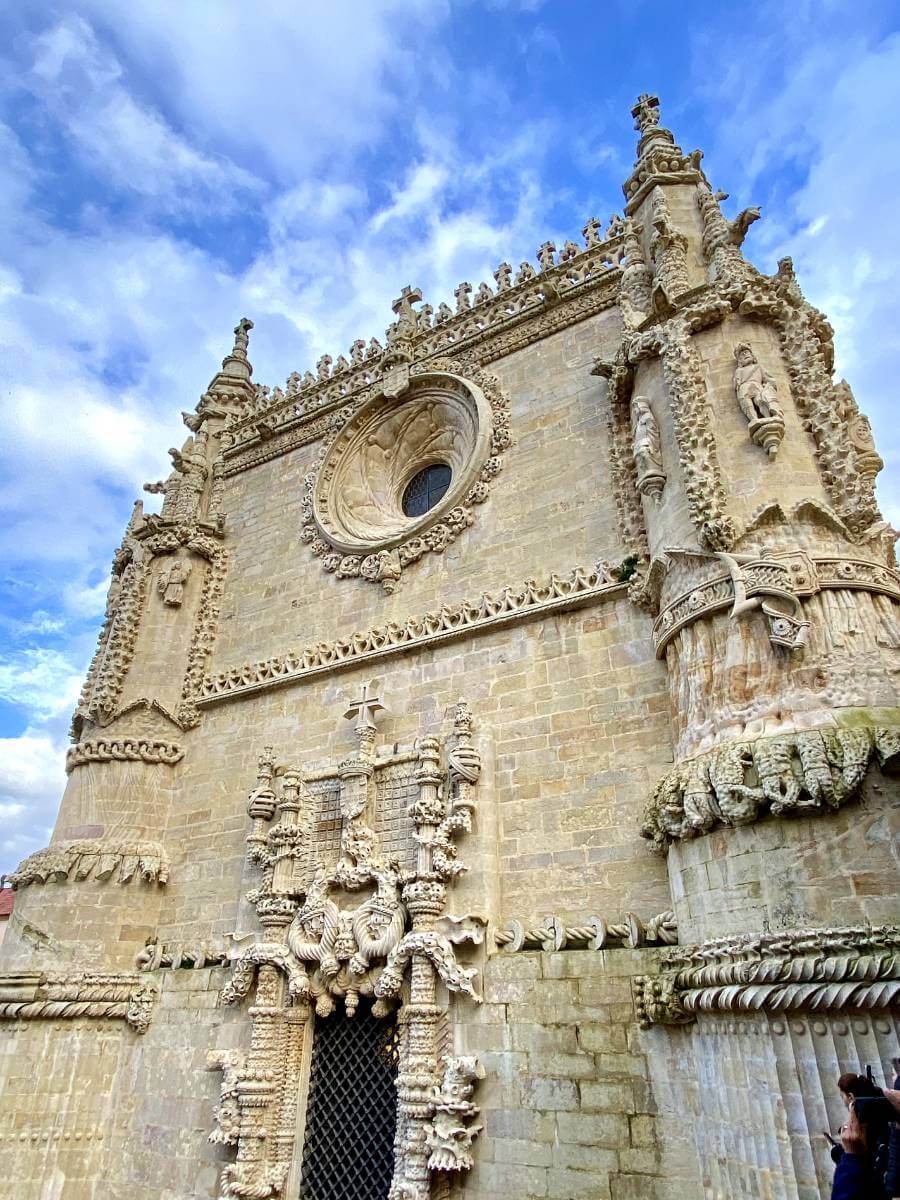
You can see the intricate designs on the outside of the church, the Manueline window, and on some of the columns inside the convent. Richly decorated with maritime symbols, ropes, exotic motifs, and royal emblems, the Manueline style celebrates Portugal’s seafaring achievements.
Highlights Not to Miss
The Rotunda
The circular Templar church is the heart of the complex. Its richly decorated interior, gilded details, paintings, and unusual circular design make it one of Portugal’s most memorable religious spaces.
The Famous Manueline Window
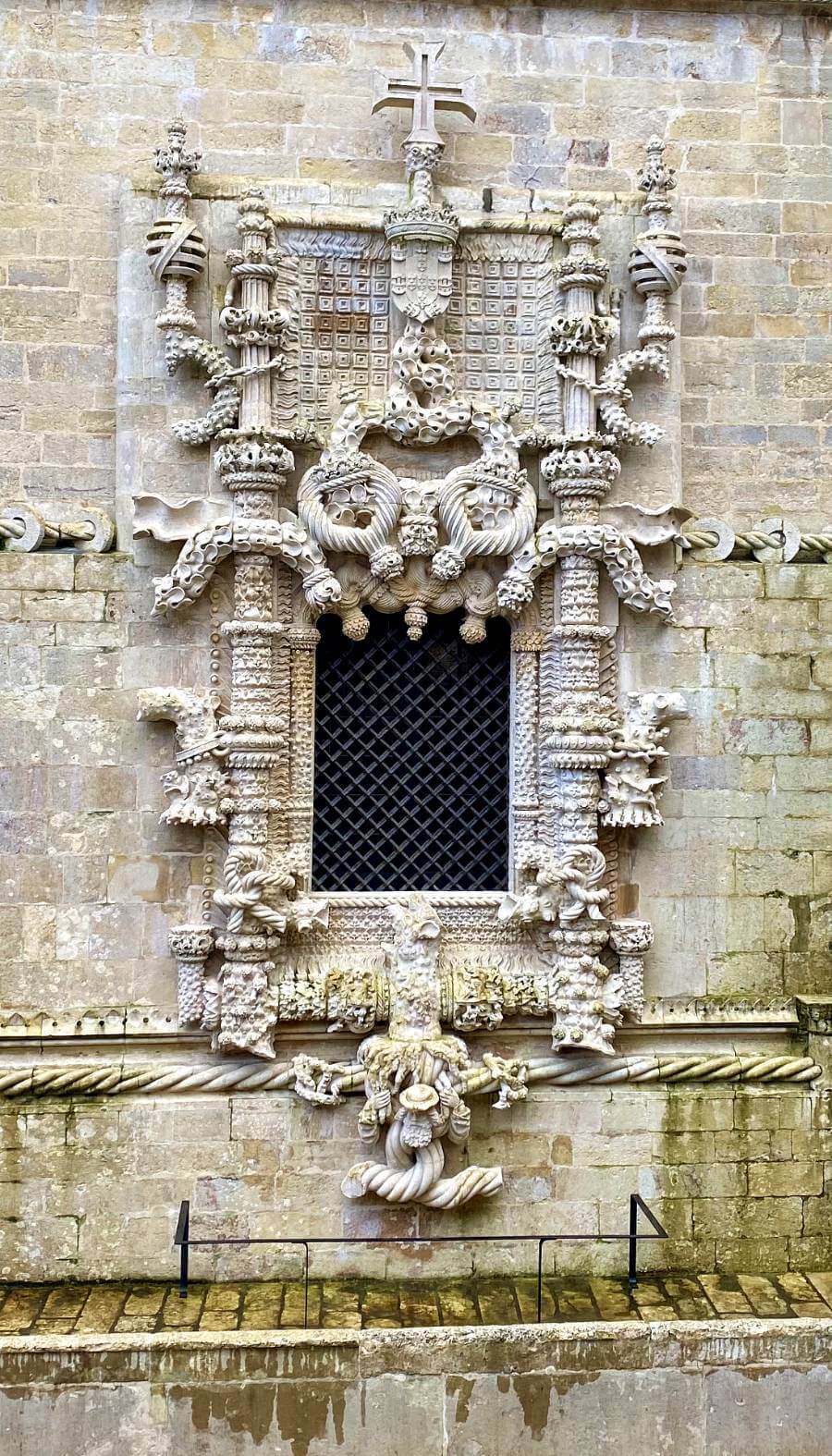
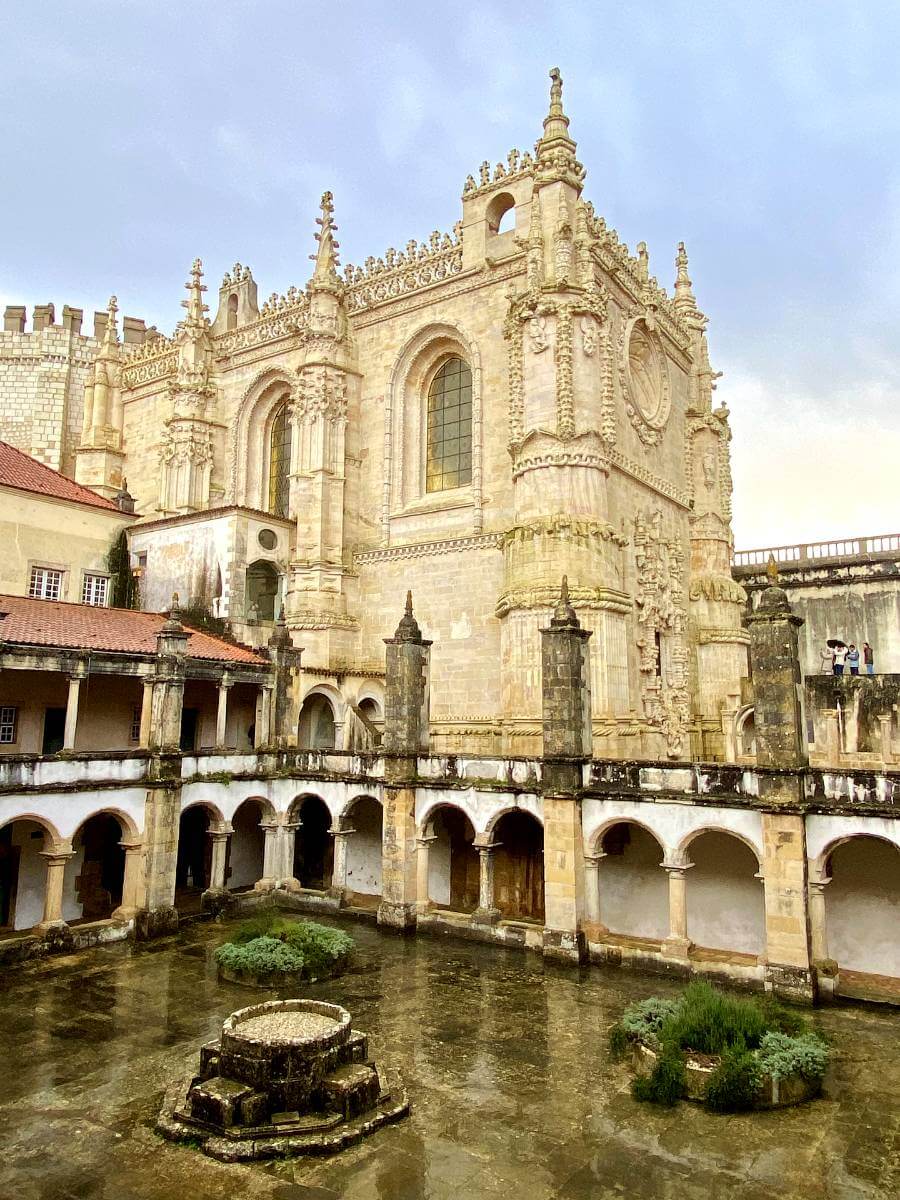
Probably the most photographed feature of the convent, this elaborate window is a masterpiece of Manueline decoration. Twisted stone ropes, coral-like carvings, and maritime symbols create a unique work of art. Take your time to look at all the details and imagine what they represented.
The Templar Castle
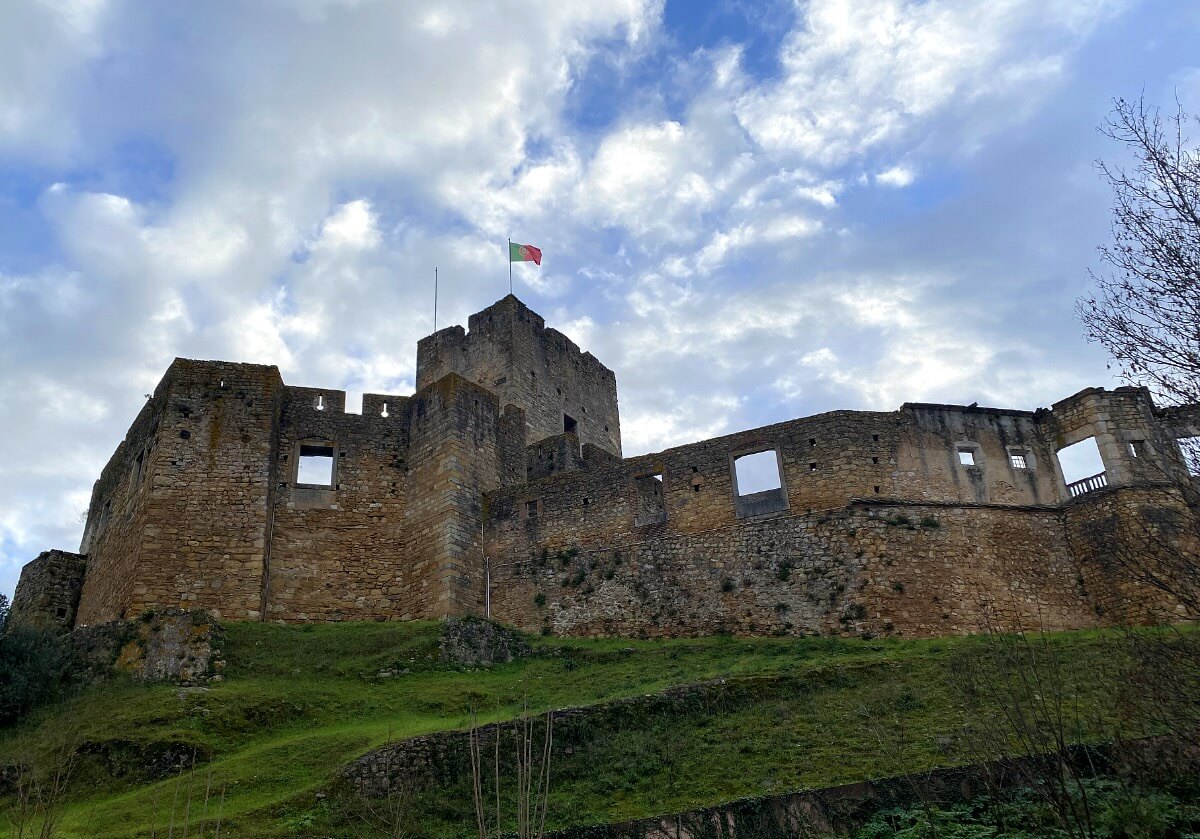
While visiting the Convent of Christ, you will see the adjoining castle, but the castle itself is temporarily closed to the public.
The Cloisters
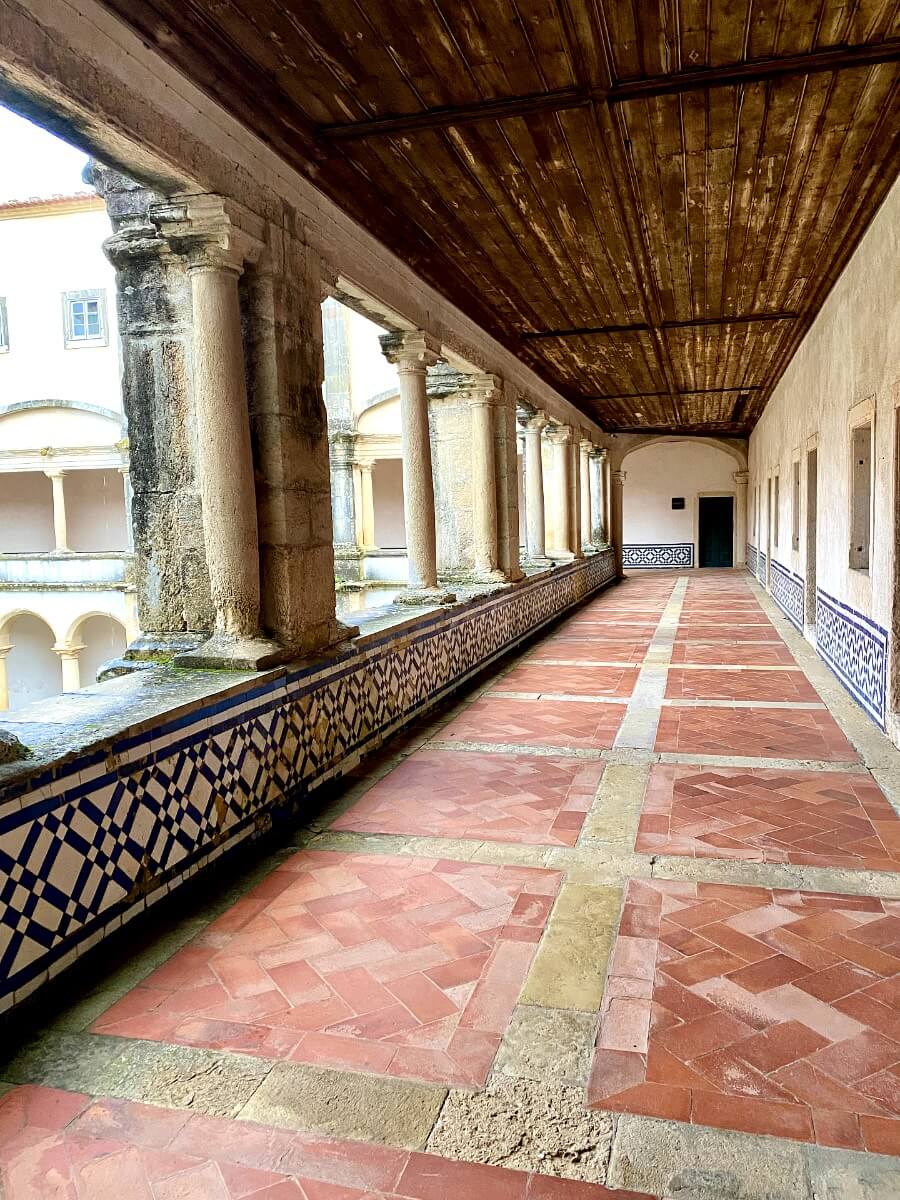
The convent contains several cloisters built over different centuries, each reflecting a distinct architectural style and period of Portuguese history. One of them is the Great Cloister. Designed during the Renaissance period, this elegant cloister features graceful arches, staircases, and beautiful symmetry, and it offers some of the best opportunities for photography at the convent.
The Interiors
You can explore the hallways and rooms of the convent to get a feeling of what life was like for residents. These spaces include the kitchens, dining hall, lavatories, sleeping areas, and more.
How to Visit
The Convent of Christ is located in Tomar, approximately 90 minutes northeast of Lisbon.
Getting There
By Train: Direct trains connect Lisbon’s Santa Apolónia and Oriente stations to Tomar.
By Car: The drive from Lisbon takes about 1.5 hours and offers flexibility for exploring nearby attractions. The roads are easy to navigate. We arrived here on our way from the Algarve to Coimbra.
Visiting Tips
- Tickets can be purchased online or at the entrance when you arrive. It costs 15 euros per adult with half price tickets for people ages 12-24 or 65 or older. Children under 12 are free.
- Allow at least two hours to explore the complex.
- Wear comfortable shoes, as the site is extensive and includes stairs and uneven surfaces.
- Visit early in the day to avoid crowds, especially during summer.
- Bring a camera; the architecture and views are spectacular.
- Combine your visit with a walk through Tomar’s historic center and nearby Sete Montes Woods.
Best Time to Visit
Spring and autumn offer pleasant temperatures and smaller crowds. Summer can be quite hot, especially when exploring the castle grounds, and in the winter and spring, you may get a rainy day, as we did. However, because the convent is mostly indoors, this is not a bad activity on a rainy day.